If your Google traffic looked a little different over the last two weeks, there is a good chance this is why. Google finished rolling out a major update to its search results on November 24, and we have been watching what it did across the companies we manage at Supercurve.
The short version is that most sites have nothing to worry about, and for anyone who did see a change there are sensible, unhurried things to do about it.
What happened
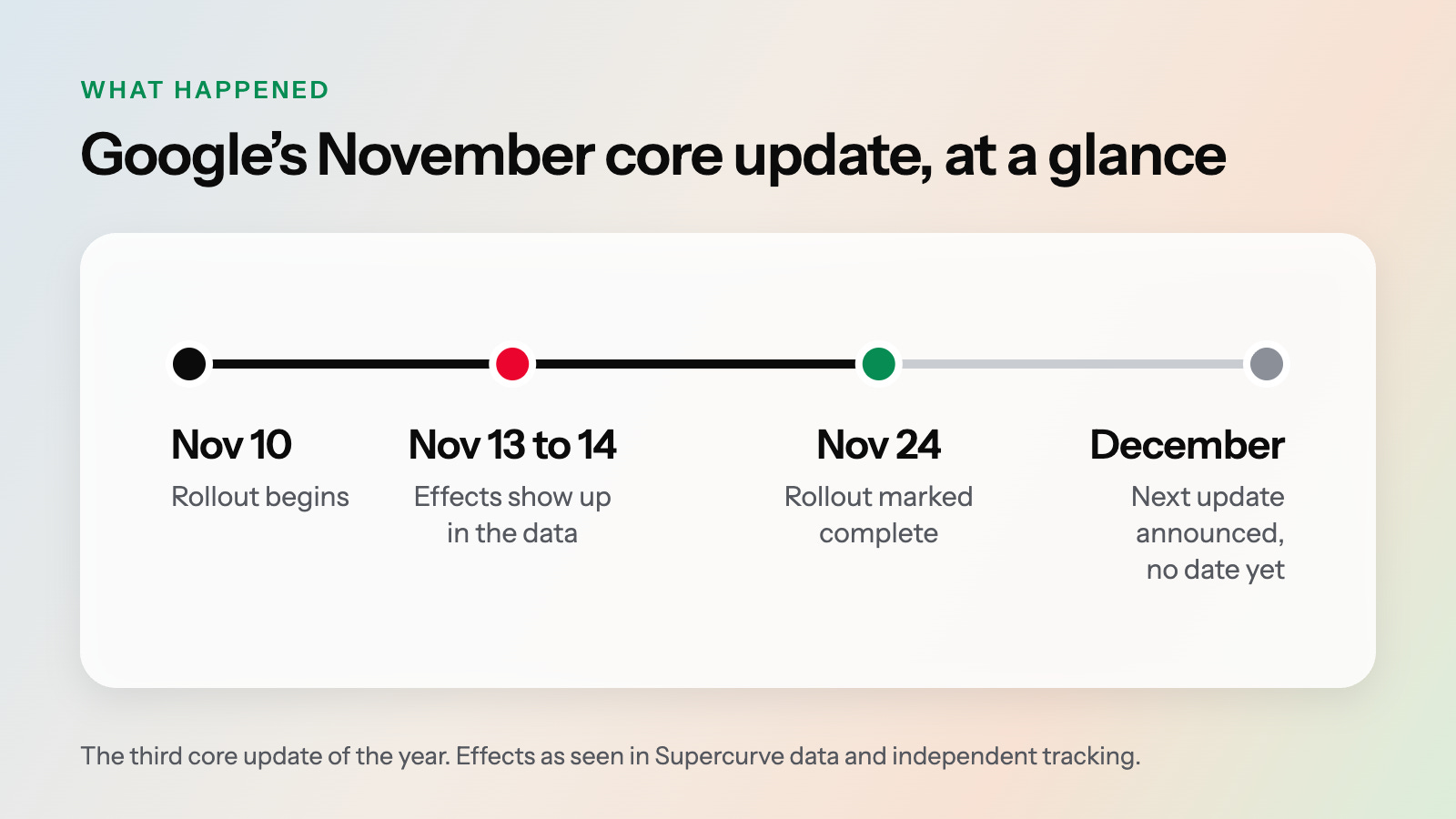
A few times a year Google makes a broad change to how it ranks pages, and it calls these core updates. This one began on November 10 and was marked complete on November 24. It was the third of the year.
The effects did not arrive on day one. In our data, and in independent visibility tracking, they showed up around November 13 and 14.
A core update is not a penalty. Google’s own explanation compares it to refreshing a list of your favourite restaurants a few years after you wrote it. New places have opened and your tastes have moved on, so the order changes, and a restaurant that slips a few spots hasn’t done anything wrong.
Do you need to worry?
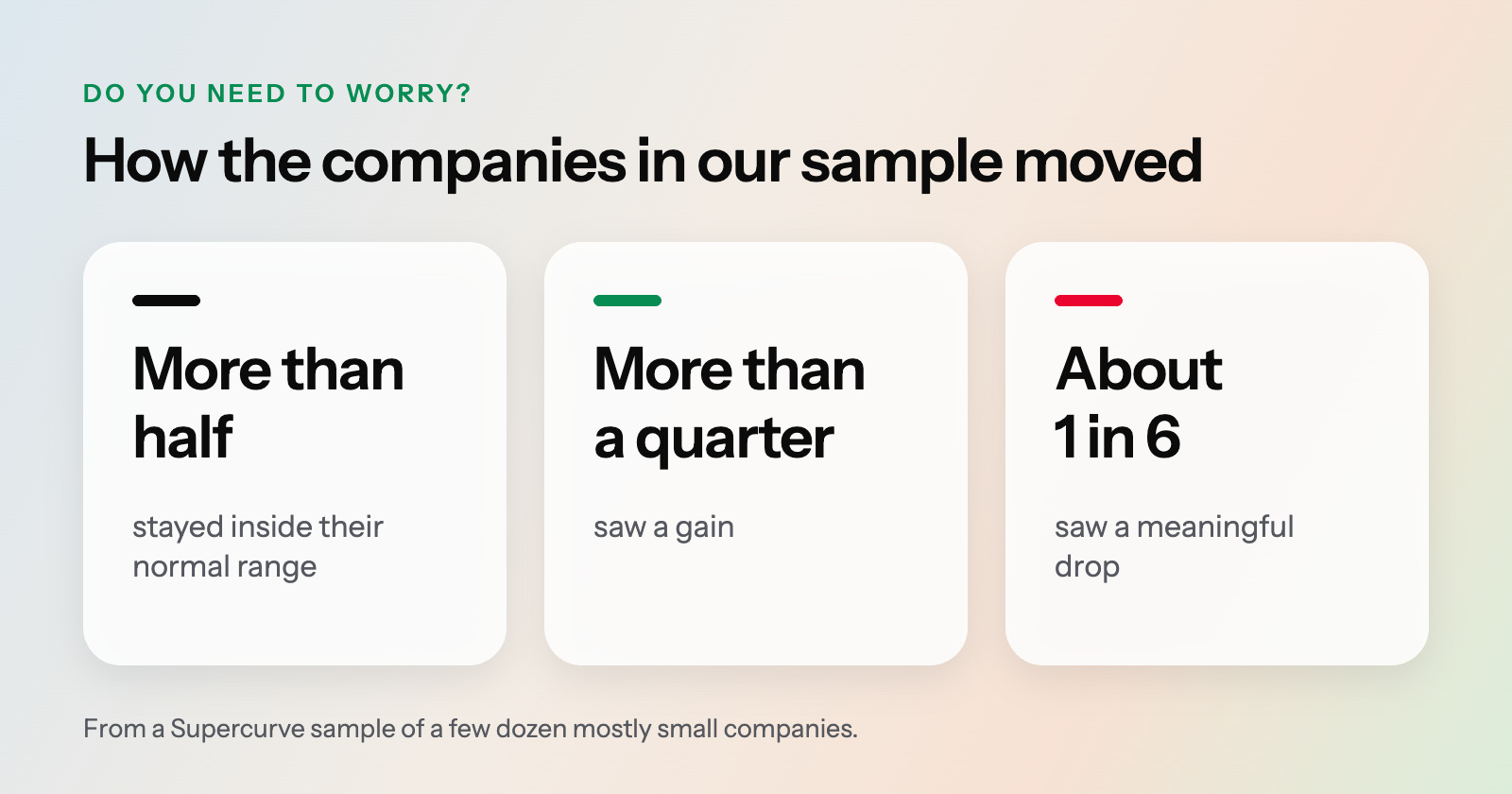
Probably not. Google’s guidance says that “most sites don’t need to worry about core updates”, and our data agrees. More than half of the companies in our sample stayed inside their normal range. About one in six saw a meaningful drop, and more than a quarter saw a gain.
It also helps to remember that everyone in your market got the same update on the same day, and that the pages which bring in customers held up well, which is the next part.
What we saw
Where a site lost visibility, it was mostly on blog content about topics sitting next to the business.
A giveaway app lost most of the visibility on a post about whether prizes are tax deductible.
A footwear brand lost most of it on a “10 best” round-up.
A survey software company lost it on glossary-style posts defining industry terms.
Home pages and product pages held up, and so did searches for the company by name, on the site where we could check this page by page.
Where a site gained, it was on pages close to what it sells. A supplement brand’s dosage guide grew by nearly half, while a loosely related food post on the same blog fell by about a third.
This matches what has surfaced elsewhere since. Independent analysis of other sites shows the same thing, with templated sections aimed at off-topic searches falling while product and brand pages held.
Google has not said what this update was aimed at, so please read this as a pattern we observed across a few dozen mostly small companies and not as a rule. Every company mentioned here is anonymised. These numbers also come from the rollout itself, so we will look again once there is a full week of data after it.
A drop in traffic is not a drop in business
The largest site affected in our sample lost about 65% of its Google traffic in nine days, which looks alarming on a chart. Over the same days, searches for the company by name fell 4% and free trial clicks fell by about a quarter.
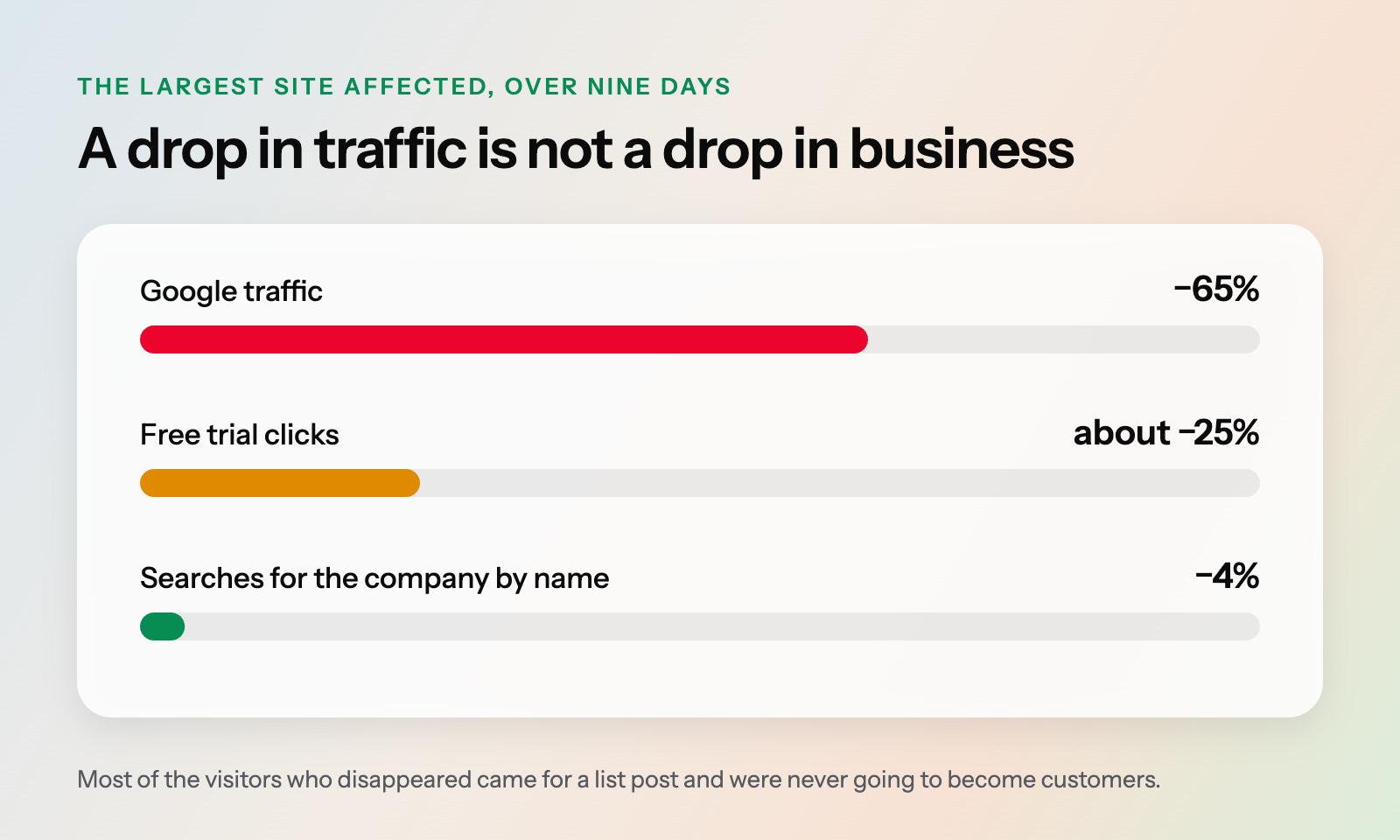
A quarter is worth taking seriously. It is also a very different number from 65%. Most of the visitors who disappeared had arrived to read a list post and were never going to become customers.
What to do
Wait a week before judging. Google suggests comparing a full week after the update finished with a week before it began. This year that week includes Thanksgiving and Black Friday, so compare it with the same week last year as well.
Look at conversions before traffic. Signups, trials, sales and searches for your name tell you what happened to the business.
Leave alone what is working. Google specifically advises against changing content that is already performing well.
Ask how close each blog post is to what you sell. Keep and improve the close ones.
Add what only you know. Your own data, your product knowledge and your customers’ real questions are what other sites can’t copy.
Build useful pages near the product. Guides and calculators that help someone use what you sell did well in our data.
What not to do
Don’t rebuild or roll back your site in a hurry. One company in our sample had launched a new site days before its traffic fell, and the new site turned out to have nothing to do with it.
Don’t delete pages in a rush. Decide once you have a clean week of data.
Don’t paste a traffic screenshot into Claude or ChatGPT and act on the answer. It can only see the one chart you gave it, so it tends to blame whatever you changed most recently.
Be wary of anyone promising a quick fix. Nobody can guarantee a recovery.
What happens next
About an hour after marking the November update complete, Google announced a December core update in advance, which it has never done before. It says that one will focus on longer, more complex questions and on personalised results, and it has not given a date.
So things may move again next month. Changes after a core update have often had to wait for the next one to show up in the numbers, which makes this a good moment to do the content work above calmly and in your own time.
How we could tell
Supercurve holds the search and analytics data for every company connected to it in one place. That is how we could see unrelated companies move on the same two days and tell a Google update apart from a problem on one site, in an afternoon.
If you only have your own site to look at, you can still get most of the way there. Check whether the drop sits in one type of content, whether searches for your company name held, and whether the date it started lines up with Google’s announced rollout. We will be watching December’s update the same way and will share what we find.
Sources
Search Engine Journal on the start and completion of the rollout
Search Engine Land and Search Engine Journal on the December announcement